Approaching rock-color
Rock-color is the East’s understanding of "colour", written with the hues of natural minerals on hemp paper and walls.
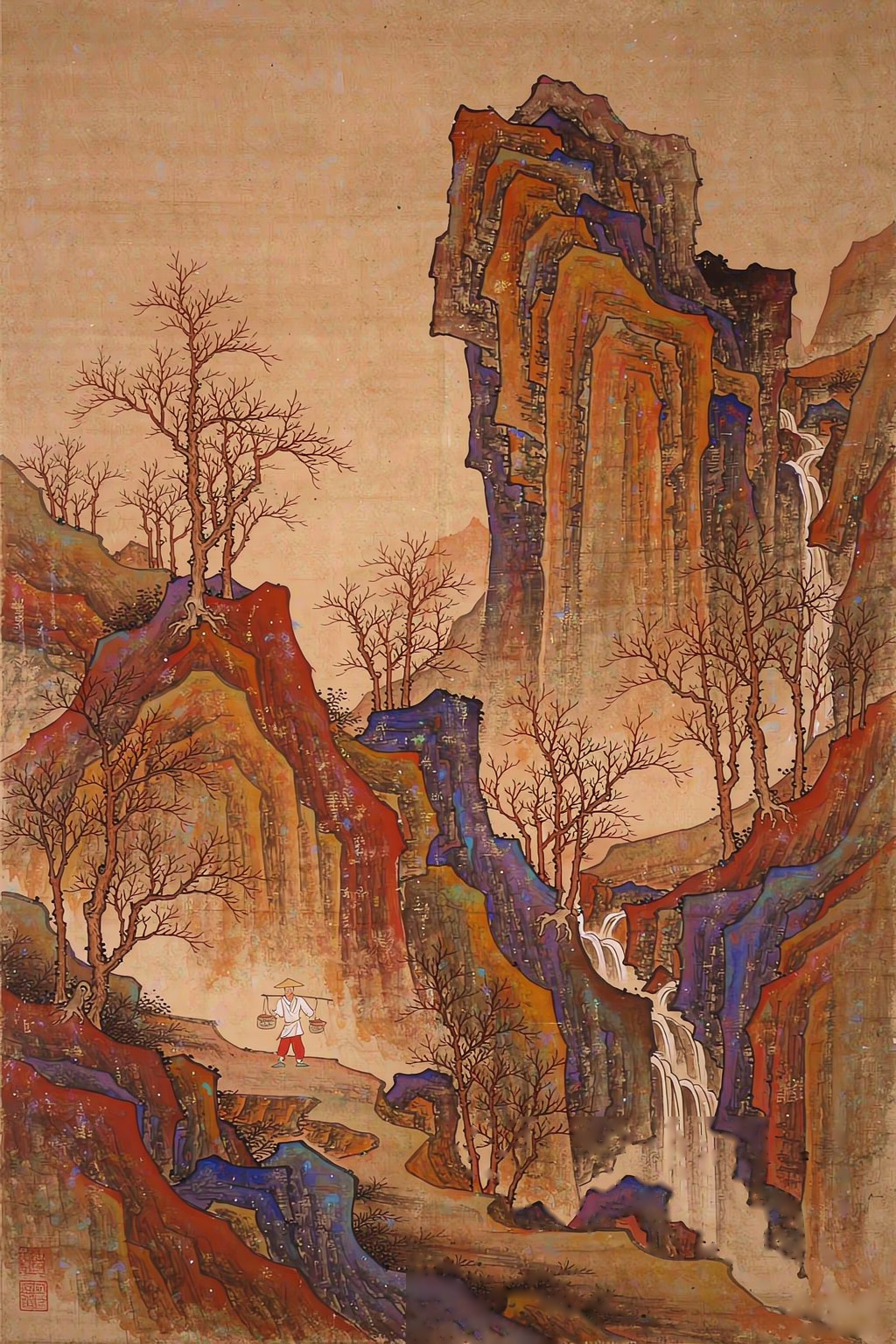
What is rock-color painting?
Rock-color painting uses pigments ground from natural minerals (yancai) as its primary medium. Unlike the transparent washes of ink painting, and unlike the even flatness of Western paints, rock-color builds a warm, substantial, richly textured surface through grain size, layered colour and glue-alum binding.
It flourished in the cave murals of Dunhuang, Kucha and Kizil, and forms an important branch of the Chinese colour tradition.
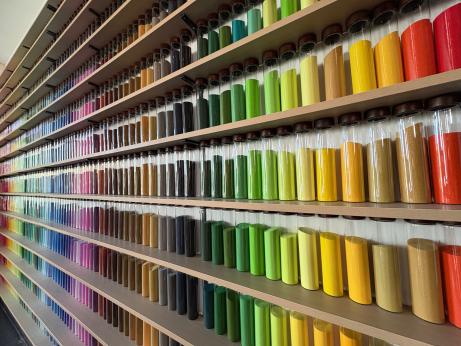
Natural mineral pigments
Cinnabar · Ochre
The reds and browns of cinnabar and iron-bearing stone — the warmest, most vital family in rock-color.
Azurite
From azurite ore: calm and noble, often seen in mural skies and garments.
Malachite
From malachite: fresh and gentle, a staple for landscape and bird-and-flower work.
Shell white
White made by grinding and firing shells — highly opaque, used for grounds and highlights.
Gold leaf · metals
Gold and silver leaf and leaf powder bring the lustre and splendour unique to rock-color.
Glue, alum and water
Animal glue binds, alum sets — the key to making mineral grains "stand" on the surface.
The artistic value of rock-color
Mineral grains make colour "stand" on the surface and shimmer as light moves; layering gives an almost three-dimensional depth; natural hues remain as stable after a thousand years. Rock-color holds both the honesty of material and the weight of time.
- Stable hue, better with age
- Grain texture that shines under light
- A living transmission of the Eastern view of colour
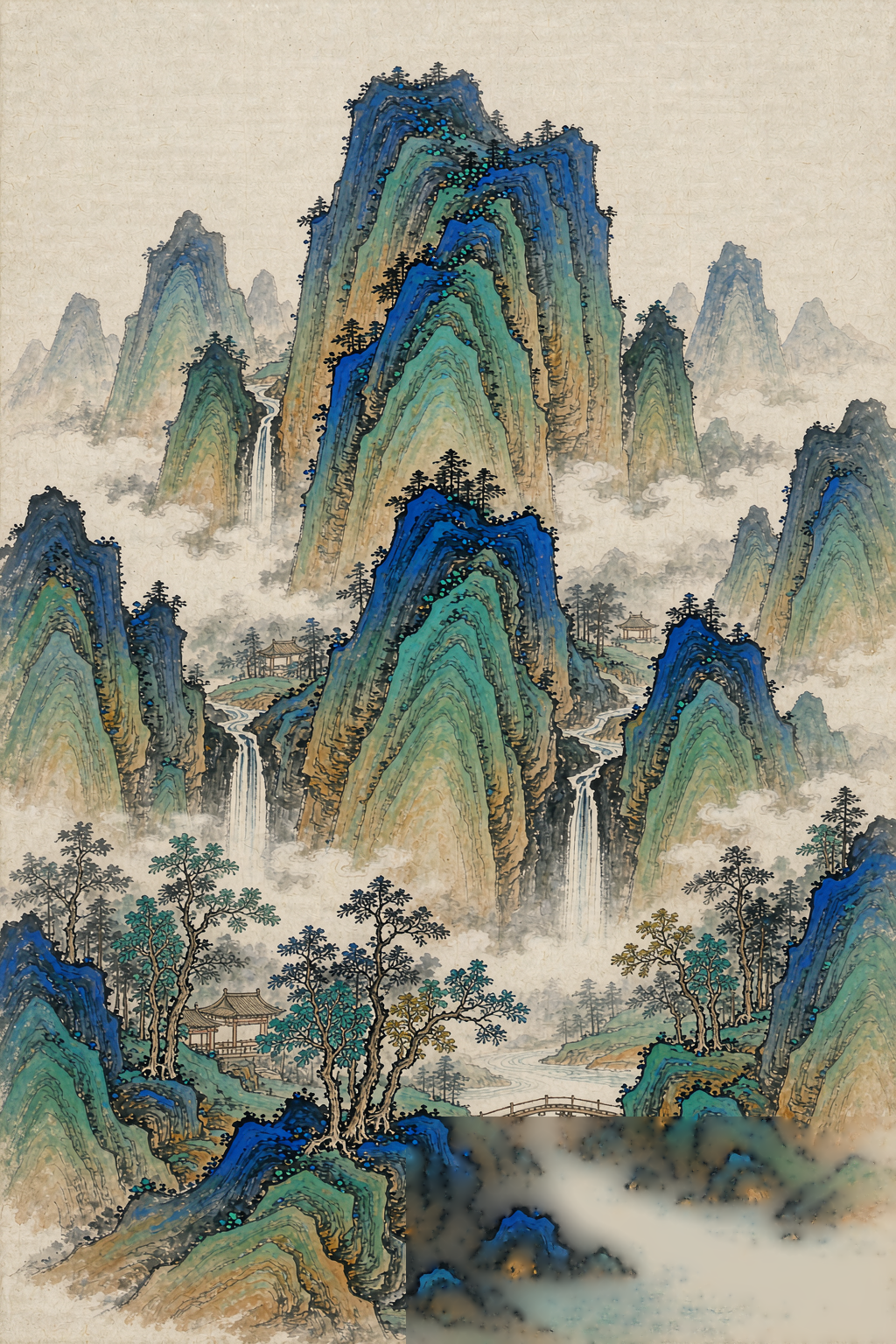
Rock-color today
Over recent decades, artists and educators have brought rock-color back to life — from walls to easel, from inheritance to innovation.
Into the classroom
More academies and institutions now offer rock-color courses, and systematic teaching keeps the craft alive.
Contemporary voices
Young artists use rock-color for abstraction, installation and cross-media work, widening its boundaries.
Why Rock-Color Painting
Mineral pigments last a millennium and add tactile depth—bring ancient mural art into your home and life.
Rock Color in Brief
Rock-color (Yan-Cai) painting is one of China's oldest art forms, using natural mineral pigments. It flourished in the Han and Tang dynasties—Dunhuang, Yongle Palace, Fahai Temple murals are all mineral rock-color works.
Centuries of weathering haven't dimmed their brilliance, thanks to the stable nature of mineral pigments. Ancient masters quarried stone, ground it, washed and graded it into powders of different coarseness, then layered, stippled, and gilded them to create rich, glowing murals.
Ancient rock-color is no longer confined to heritage sites. We extend this traditional craft so modern people can learn it, collect it, and bring it into their homes and spaces.
Mineral Pigments
Made from the same natural ores used in Dunhuang, Yongle Palace and Fahai Temple—not chemical watercolors or acrylics. Mineral powders carry a natural luster.
Textured Surface
Not a flat, thin layer. Multi-layer shading and glazing produce tactile depth. Crystal particles catch the light, giving a look that printing or ordinary wall painting can't match.
Long-lasting
Mineral pigments are stable and don't yellow or fade easily. They stay beautiful in homes, tea rooms, clubs, and temple projects for years.
Craft Bonus
Add gold/silver leaf and coarse mineral grains to enrich atmosphere and amplify the timeless Chinese aesthetic.
Where it Fits
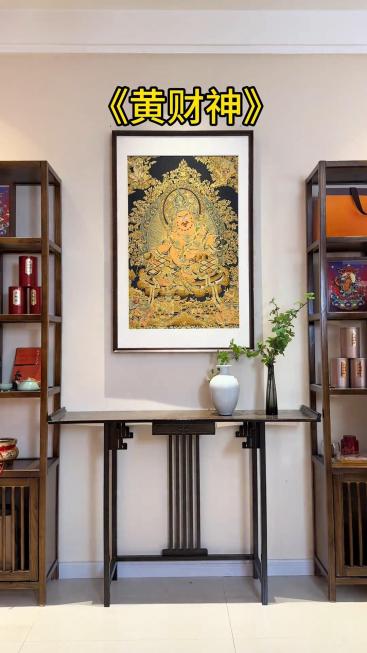
- Home: Villa living-room feature wall, tea room, study, Zen bedroom, entryway.
- Commercial: Beauty salon, teahouse, traditional culture school, B&B, club showroom.
- Large projects: Temples, exhibition halls, cultural-tourism murals.
What You Can Do After
Side Income
Take on home, tea-room, and commercial mural commissions, or small decorative pieces.
Personal Hobby
Find calm and healing through traditional Chinese art while mastering a real skill.
Career Path
Move toward full-time muralist or Chinese-style content creator and build your own art IP.
Large Projects
Eventually take on temple and cultural-tourism mural commissions.
Rock-Color Craft Basics
Care guide, mineral pigment 101, and the three great mural sites—Dunhuang, Yongle Palace, Fahai Temple.
Care Guide for Mud-Board Rock-Color Paintings
Rock-color mud boards are made from earth and fiber to imitate ancient mural bases. Proper care ensures they last for generations.
- Placement: avoid prolonged direct sunlight, kitchens and bathrooms where humidity and oily fumes damage the surface and may cause cracking or peeling.
- Dusting: use only a soft, dry brush or cloth. Never use water or wet wipes.
- Handling & storage: support the whole piece with both hands, never the frame edge alone. Store in a dry, ventilated place without stacking weight.
Slight shrinkage with humidity changes is normal.
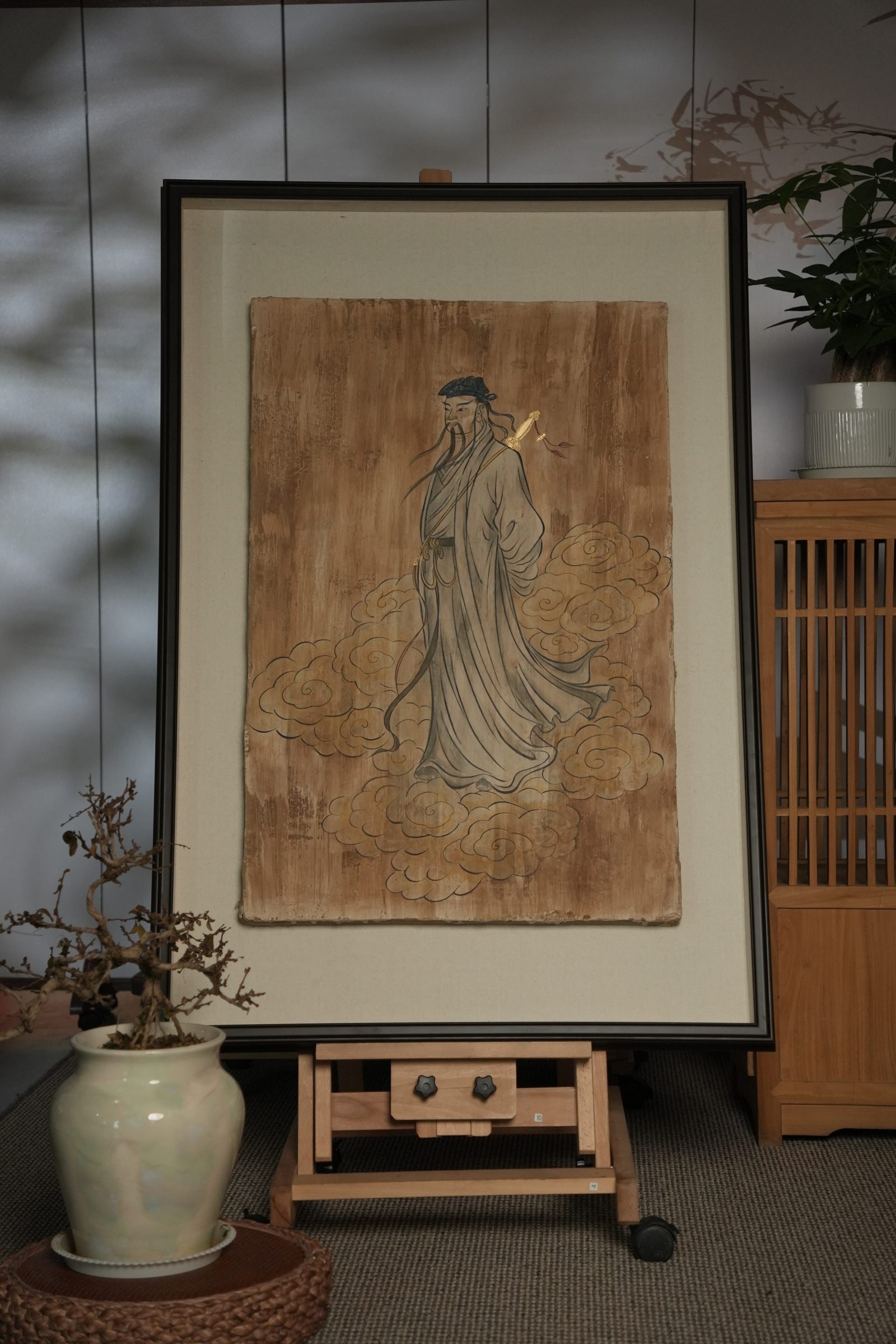
Natural Mineral Pigments 101
Mineral pigments—ground from natural ore—are why Dunhuang and Yongle Palace murals still glow after a millennium. Ore is mined, crushed, washed, and graded into different grain sizes: coarse particles feel weighty and catch the light, fine particles are for smooth gradations.
Unlike acrylics or watercolors, mineral pigments have a deep, warm tone; their crystals reveal a unique shimmer in light.
Different ores yield different colors: malachite green comes from malachite, azurite blue from blue copper ore, cinnabar red from cinnabarite. Mineral pigments are stable and resist fading in normal environments, but please keep them away from direct sunlight.
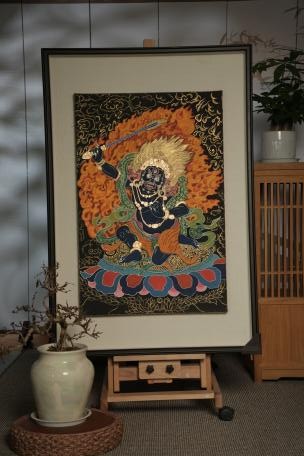
Three Great Mural Sites — Dunhuang · Yongle Palace · Fahai Temple
These three sites are the most representative ancient rock-color mural treasures in China.
- Dunhuang Mogao Caves: spanning many dynasties, the brilliant peak of Tang rock-color painting.
- Yongle Palace murals: the apex of Yuan-dynasty mural art, with flowing lines, layered color, and unmatched gilding.
- Fahai Temple (Ming): exquisite brushwork combining mineral colors with raised-paste and gilding.
All of these ancient murals were painted with natural mineral pigments. Our course inherits that tradition and brings it into the contemporary world—learnable, collectible, and livable.